MCP vs A2A: Which Agent Protocol Do You Need in 2026?
MCP connects agents to tools and context; A2A connects agents to each other. How the two protocols differ, where each fits, when you need both, and the enterprise security considerations for each in 2026.
MCP vs A2A: Which Agent Protocol Do You Need in 2026?
Here is the snippet-ready answer: MCP (Model Context Protocol) connects agents to tools and context - databases, APIs, documents, SaaS apps. A2A (Agent2Agent protocol) connects agents to other agents - discovery, task delegation, and collaboration across vendors. MCP is the vertical integration layer, A2A is the horizontal one. They compose rather than compete, and by 2026 most serious agent architectures use both.
That one-paragraph answer hides a lot of practical detail: two different governance bodies, a protocol merger, a major spec release landing this month, and two very different security models. This guide unpacks all of it so you can decide what your architecture actually needs.
What MCP is in 2026
Model Context Protocol launched from Anthropic in November 2024 as an open standard for exposing tools, data sources, and prompts to LLM applications through a uniform client-server interface. The “USB-C for AI” framing stuck because it is accurate: any MCP-compliant agent can plug into any MCP server without custom integration code.
What changed between then and mid-2026 is scale and governance:
- Adoption is effectively universal. OpenAI, Google DeepMind, and Microsoft all shipped MCP support within months of launch, and by 2026 the protocol runs inside ChatGPT, Gemini, Microsoft Copilot, Cursor, VS Code, and the entire Claude ecosystem. Anthropic’s ecosystem updates cited more than 10,000 active public servers and 97M+ monthly SDK downloads by late 2025, and independent censuses in 2026 index thousands more servers across registries.
- Governance went neutral. In December 2025 Anthropic donated MCP to the newly formed Agentic AI Foundation (AAIF) under the Linux Foundation, co-founded with OpenAI and Block and backed by AWS, Google, Microsoft, and Salesforce. The protocol your integrations depend on is no longer a single vendor’s project.
- The spec is maturing right now. The MCP 2026-07-28 specification is imminent - the release candidate locked in May 2026 and the final spec publishes on July 28. It brings a stateless protocol core (a big deal for serverless and horizontally scaled deployments), an extensions framework, first-class tasks for long-running operations, MCP Apps, hardened authorization, and a formal deprecation policy with twelve-month windows. Beta SDKs for Python, TypeScript, Go, and C# are already out.
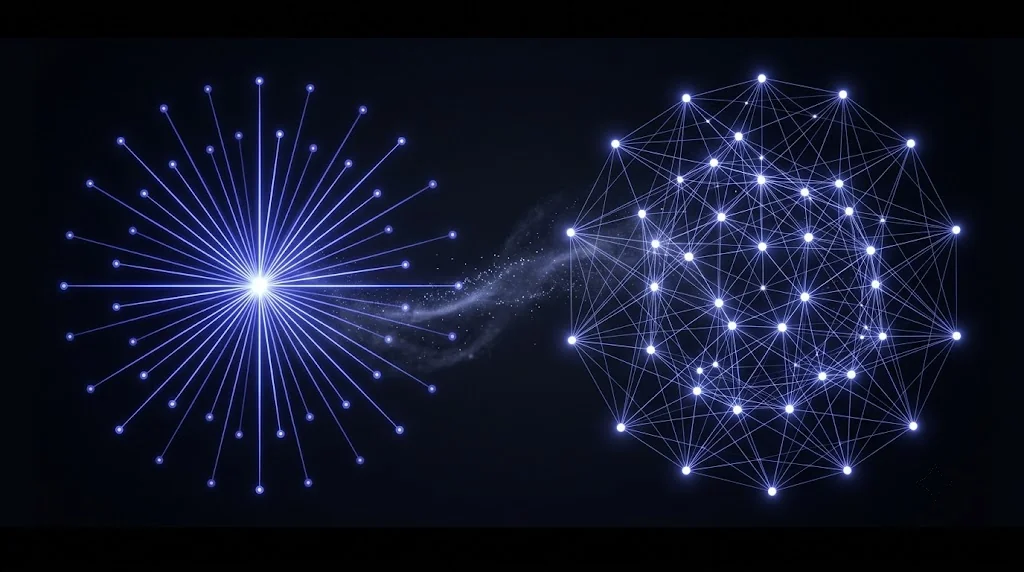
Architecturally, picture it as a hub and spokes. Your agent (the MCP host) runs clients that each connect to one server; each server wraps a capability - Postgres, GitHub, Slack, your internal pricing API - and exposes tools (functions the model can call), resources (data it can read), and prompts (reusable templates). The agent reasons; the servers do. We cover deployment patterns in depth in our Model Context Protocol enterprise guide.
What A2A is in 2026
Agent2Agent launched from Google in April 2025 with a different question: once everyone has agents, how do agents talk to each other? Not “how does my agent query a database” but “how does my procurement agent negotiate with your supplier’s fulfillment agent, when the two were built by different companies on different frameworks?”
The protocol’s core concepts:
- Agent Cards - a JSON manifest an agent publishes describing its identity, capabilities, endpoints, and auth requirements. This is how agents discover what a peer can do.
- Tasks with lifecycle - work items that move through states (submitted, working, input-required, completed, failed), supporting long-running operations, streaming progress via SSE, and push notifications.
- Opaque collaboration - agents exchange goals and artifacts without exposing their internal reasoning, tools, or memory, which is exactly what you want across trust boundaries.
Governance moved fast. Google donated A2A to the Linux Foundation in mid-2025, and in August 2025 IBM’s ACP (Agent Communication Protocol) formally merged into A2A under the LF AI & Data umbrella - ending the brief “MCP vs ACP vs A2A” confusion of early 2025. ACP’s contributions (RESTful simplicity, task persistence, asynchronous resumption, webhook progress notifications) are now native A2A capabilities. If you shortlisted ACP, its roadmap lives inside A2A now.
By its first anniversary the protocol had surpassed 150 member organizations, with a technical steering committee spanning AWS, Cisco, Google, IBM, Microsoft, Salesforce, SAP, and ServiceNow, and production deployments across major enterprise platforms. The A2A v1.0 release hardened it for enterprise use: Signed Agent Cards (cryptographic verification that a card was issued by the domain owner), multi-tenancy for SaaS providers, version negotiation, and three standard transport bindings - JSON-RPC, gRPC, and HTTP+JSON/REST.
The architecture, in words
Imagine a trade finance operation in Dubai:
MCP layer (vertical). Your document-processing agent connects via MCP clients to four servers: one wrapping the core banking system, one wrapping a sanctions-screening API, one exposing a document store, one exposing an internal risk-rules engine. Each connection is agent-to-capability. The servers have no opinions; they execute and return.
A2A layer (horizontal). That document agent is one of several. A compliance agent (built by another team on a different framework) and a customer-communication agent (a vendor product) each publish Agent Cards. When the document agent finishes extraction, it opens an A2A task with the compliance agent: “screen this shipment, here are the artifacts.” The compliance agent works - possibly for minutes, streaming status - and may respond input-required when a human decision is needed. Neither agent sees the other’s tools, prompts, or reasoning.
One agent, two roles: MCP client facing downward at capabilities, A2A server facing outward at peers. That is the composition pattern, and it is why the “versus” framing misleads.
When you need which
| Situation | Protocol |
|---|---|
| Agent needs to query, fetch, or act on a system (DB, API, SaaS, files) | MCP |
| Exposing your internal data/tools to many agent applications, once | MCP (build one server, every host connects) |
| Two agents from different vendors/teams must collaborate | A2A |
| Long-running delegated work with status, streaming, human input states | A2A |
| Cross-organization agent interactions (partners, suppliers, customers) | A2A with Signed Agent Cards |
| Single agent, single team, internal tools only | MCP only - A2A is premature |
| Multi-agent system inside one framework (subagents, handoffs) | Neither, necessarily - your framework’s native orchestration is fine |
That last row matters. If your “multi-agent” system is one team’s subagents inside the Claude Agent SDK or OpenAI Agents SDK, the framework’s own delegation is simpler than A2A. The protocol earns its complexity when agents cross team, vendor, runtime, or organizational boundaries - the same logic by which Microsoft Agent Framework supports A2A for cross-runtime collaboration while keeping its internal Workflows native.
A useful rule of thumb: if the thing you are calling executes and returns, wrap it in MCP. If it reasons, negotiates, or works over time, talk to it over A2A.
When you need both
You need both the moment your architecture has layers of autonomy: agents that own capabilities (MCP downward) and coordinate with peers (A2A outward). Concretely, that shows up as:
- Agent mesh inside a large enterprise - each department ships its own agent; MCP standardizes each agent’s tool access, A2A standardizes inter-agent delegation.
- Vendor agent integration - you buy a SaaS product that ships an agent; your agents talk to it over A2A rather than screen-scraping its API, while your own tool layer stays MCP.
- The UAE agentic mandate pattern - as Dubai pushes private-sector agent adoption, firms that deployed isolated pilot agents in 2025 are now wiring them together; both protocols are how you do that without a bespoke integration per pair.
Enterprise security considerations
The two protocols concentrate risk in different places. Treat protocol adoption as a security architecture decision, not a plumbing detail.
MCP security. The agent-to-tool link is where prompt injection meets real permissions. Priorities:
- Vet servers like dependencies. A malicious or compromised MCP server can poison tool descriptions to manipulate the model (“tool poisoning”). Pin versions, prefer signed/official servers, and review what registry entries you allow.
- Scope credentials per server, per agent. No shared god-tokens. The 2026-07-28 spec’s authorization hardening improves the OAuth story, but least-privilege design is still yours to do.
- Treat tool output as untrusted input. Data returned by a tool can carry injection payloads back into the model. Validate and, where feasible, sanitize - we cover this class of attack in our prompt injection guide.
- Gate consequential actions. Approval workflows for anything that moves money, changes records, or sends communications.
A2A security. The agent-to-agent link is where identity and delegation live. Priorities:
- Verify agent identity. Signed Agent Cards in v1.0 exist precisely because an unsigned card is a phishing surface - an attacker publishing a card that impersonates your partner’s agent. Verify signatures; do not skip this because the demo worked without it.
- Bound delegation chains. When agent A delegates to B, which delegates to C, your audit trail must reconstruct who authorized what. Log task lifecycles end to end.
- Control cross-boundary data flow. Artifacts attached to A2A tasks can carry personal data across organizational lines - a PDPL and data-residency question in the UAE, not just a technical one.
- Standard enterprise auth applies. A2A rides on HTTP with conventional auth (OAuth, mTLS) - reuse your existing API-gateway policies rather than inventing agent-specific exceptions.
For regulated GCC deployments, both protocol layers should land in your model inventory and access-governance documentation - which is precisely the work our AI governance practice does alongside builds.
MCP vs A2A: comparison table
| Dimension | MCP | A2A |
|---|---|---|
| Connects | Agent ↔ tools, data, context | Agent ↔ agent |
| Direction | Vertical (capability access) | Horizontal (peer collaboration) |
| Created by | Anthropic (Nov 2024) | Google (Apr 2025) |
| Governance (2026) | Agentic AI Foundation, Linux Foundation | LF AI & Data, Linux Foundation (absorbed IBM’s ACP) |
| Spec status | 2026-07-28 release imminent (stateless core, extensions, tasks, hardened auth) | v1.0 (Signed Agent Cards, multi-tenancy, version negotiation) |
| Transports | stdio, streamable HTTP | JSON-RPC, gRPC, HTTP+JSON/REST |
| Discovery | Server registries | Agent Cards |
| Long-running work | Tasks (new in 2026-07-28) | Task lifecycle since v0.x, hardened in v1.0 |
| Key security risk | Tool poisoning, credential scope, injection via tool output | Agent impersonation, delegation chains, cross-boundary data |
| Adoption signal | 10k+ public servers, 97M+ monthly SDK downloads, all major AI vendors | 150+ member orgs, TSC of AWS/Google/IBM/Microsoft/Salesforce/SAP/ServiceNow |
| Use it when | An agent needs a capability | Independent agents need each other |
The bottom line
Stop asking which protocol wins. MCP won the tool-integration layer and A2A is winning the inter-agent layer, both under neutral Linux Foundation governance, both hitting stability milestones in 2026. The real questions are sequencing and security: almost every organization needs MCP first (your agents are useless without tools), and A2A the moment agents cross a team or vendor boundary. Build your MCP layer properly - scoped credentials, vetted servers, approval gates - and your architecture is A2A-ready when the second agent shows up.
NomadX is an AI agents consultancy in Dubai that builds MCP servers, agent skills, and protocol-ready agent architectures for UAE and GCC enterprises. If you are deciding where MCP and A2A fit in your stack, book a free 30-minute consultation - bring your integration map.
Frequently Asked Questions
What is the difference between MCP and A2A?
MCP (Model Context Protocol) connects an agent to tools, data, and context - databases, APIs, file systems, SaaS apps - through a standard client-server interface. A2A (Agent2Agent protocol) connects agents to other agents, letting independently built agents discover each other, exchange tasks, and collaborate across vendors and runtimes. They solve different layers of the same stack: MCP is vertical (agent to capability), A2A is horizontal (agent to agent). They compose rather than compete, and most serious agent architectures in 2026 use both.
Do MCP and A2A compete with each other?
No. Google explicitly positioned A2A as complementary to MCP at launch, and both now live under Linux Foundation governance - MCP under the Agentic AI Foundation, A2A under LF AI & Data. A single agent typically acts as an MCP client to reach its tools and an A2A server to expose its capabilities to other agents. The overlap cases are narrow (you can wrap an agent as an MCP tool), but for peer-to-peer delegation with task lifecycle, streaming, and cross-vendor discovery, A2A is the purpose-built layer.
What happened to IBM's ACP protocol?
ACP (Agent Communication Protocol) merged into A2A in August 2025, when IBM and Google brought the two efforts together under the Linux Foundation's LF AI & Data umbrella. ACP's distinctive capabilities - RESTful simplicity, task persistence, asynchronous resumption, webhook-based progress notifications - were folded into the A2A specification, and A2A v1.0 ships them natively. If you evaluated ACP in 2025, A2A is its successor; there is no separate ACP track to bet on.
When do I need A2A instead of just MCP?
You need A2A when independent agents must collaborate as peers: agents built by different teams or vendors, agents running in different runtimes or clouds, or long-running tasks that need lifecycle management (submitted, working, input-required, completed) across trust boundaries. If one agent simply needs to call a capability - query a database, file a ticket, fetch a document - that is MCP territory. A rough test: if the thing being called has its own reasoning loop and needs to negotiate, stream progress, or hand back structured task states, use A2A; if it executes and returns, use MCP.
Is MCP production-ready for enterprises in 2026?
Yes, with governance. MCP is the de facto standard for agent tool integration - adopted across ChatGPT, Gemini, Microsoft Copilot, Cursor, and the Claude ecosystem, with thousands of public servers and SDK downloads in the tens of millions per month. The specification now lives under the Agentic AI Foundation (Linux Foundation), and the 2026-07-28 spec release adds a stateless core, an extensions framework, tasks, and hardened authorization. Enterprises still need to vet servers, scope credentials, and defend against prompt injection and tool poisoning - the protocol standardizes plumbing, not trust.
Complementary NomadX Services
Related Comparisons
Get Started for Free
Schedule a free consultation with our AI agents team. 30-minute call, actionable results in days.
Every engagement is scoped by our principal architect, Adrian Vale: 20+ years in production engineering, 40+ professional certifications. Meet Adrian
Talk to an Expert