AI Agent Memory vs RAG: What's the Difference?
Agent memory vs RAG explained: RAG retrieves static docs, memory writes and updates what the agent learns. When to use each, and why you often need both.
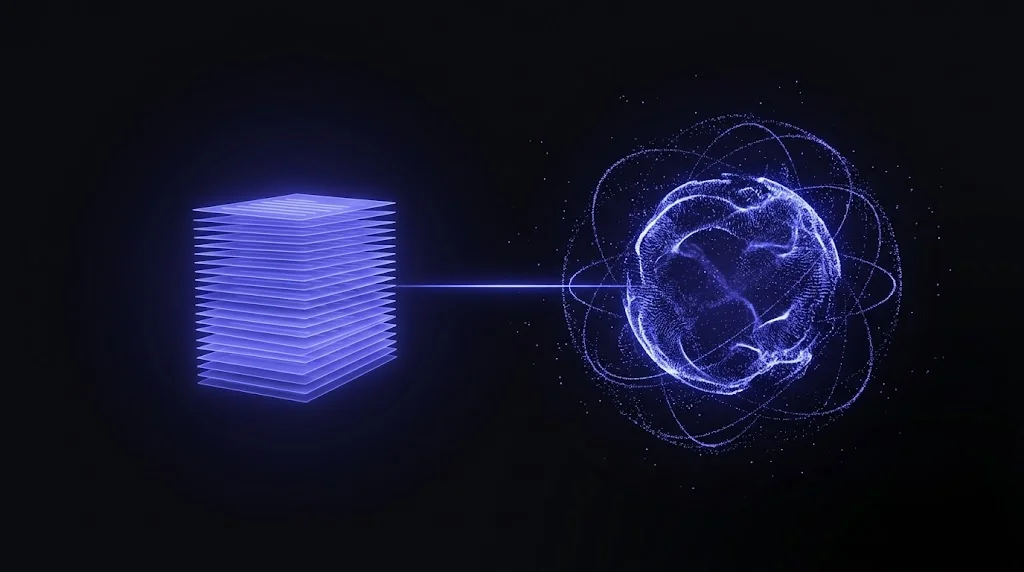
The short answer: RAG is stateless retrieval over a static corpus someone else authored, while agent memory is a dynamic store the agent writes and updates itself from its own interactions. RAG pulls relevant chunks out of your documents and drops them into the prompt; memory tracks facts the agent learned, merges them, supersedes what changed, and drops what went stale.
Here is the line worth pinning to your wall: RAG finds relevant documents; memory knows what is true about this user or task, and whether it is still true.
That distinction sounds clean, but people conflate the two constantly, partly because both often reach for a vector database under the hood. So let’s break down exactly where they differ, where they overlap, and how to decide which one (or both) your agent needs.
What is RAG, exactly?
RAG (retrieval-augmented generation) is a pattern for grounding a language model in external knowledge. You take a corpus - product docs, policies, a help center, a set of PDFs - chunk it, embed the chunks, and store them in a vector index. At query time you embed the user’s question, find the closest chunks, and stuff them into the prompt so the model answers from real content instead of guessing.
The defining trait is that RAG is stateless. The corpus is authored and maintained by you or an ingestion pipeline, not by the agent. It does not change because a user said something in a conversation. Ask the same question twice and, absent a content update, you get the same retrieval. RAG answers the question “what do the docs say?”
If you are building the storage layer for this, vector databases and managed stacks like Cloudflare Vectorize plus AI Search are the substrate. Our complete guide to Cloudflare AI capabilities walks through that side of the stack in detail.
What is agent memory, exactly?
AI agent memory is a store the agent builds from its own experience and then maintains over time. The key difference is that memory has a lifecycle RAG simply does not have:
- Extraction - pull the salient facts out of a conversation (“the user is in Dubai”, “they prefer email over calls”).
- Consolidation - merge and deduplicate related facts so you do not store the same thing five ways.
- Update - when a fact changes, supersede the old one (“moved to Abu Dhabi” replaces “in Dubai”).
- Decay and forgetting - drop entries that have gone stale or irrelevant so the store stays sharp.
That lifecycle is what makes memory stateful. The agent is the author. It answers a different question: “what do I know about this user or task?” For a deeper tour of the frameworks that manage this, see our pillar post on AI agent memory frameworks ranked for 2026.
Are memory and RAG opposites?
No, and this is the nuance most explainers miss. Memory often uses vector retrieval as a mechanism. When an agent needs to recall what it knows about a user, it may embed the current context and search its memory store exactly the way RAG searches a document store. So memory is not the anti-RAG. It is a higher-level abstraction that can sit on top of the same vector search RAG uses, wrapped in that extract/consolidate/update/forget lifecycle.
Put simply: a raw vector database is storage. A memory framework is storage plus a lifecycle plus a policy for what to keep. They are complementary, and in production they frequently run side by side.
Memory vs RAG: the comparison table
| Dimension | RAG | Agent memory |
|---|---|---|
| Data source | External corpus (your docs) | The agent’s own interactions |
| Who writes it | You or an ingestion pipeline | The agent itself |
| Changes over time | Static until you re-ingest | Self-updating from experience |
| Lifecycle | Retrieve only | Extract, consolidate, update, forget |
| State | Stateless | Stateful |
| Typical store | Vector DB | Memory framework on top of a store |
| Answers | “What do the docs say?” | “What do I know about this user/task?” |
What are the types of agent memory?
RAG mostly serves one narrow slice of what memory covers. Borrowing the CoALA framing that most 2026 frameworks lean on, agent memory spans four types:
| Memory type | What it holds | Example |
|---|---|---|
| Working / short-term | Context window plus scratchpad, wiped between sessions | The current turn’s reasoning |
| Episodic | Specific past events tied to a time | “Last Tuesday the user escalated a billing issue” |
| Semantic | General facts | “The user’s company is a 200-person fintech” |
| Procedural | Skills, rules, workflows | “Always confirm the invoice number before a refund” |
RAG mostly serves semantic-style lookup over external documents. Agent memory spans all four types and, crucially, is written from experience rather than ingested from a fixed corpus.
When should you use RAG vs memory?
Here is the decision rule, kept practical.
Use RAG when the knowledge lives in documents someone else maintains and does not depend on the individual user. Product documentation, company policies, a legal knowledge base, an engineering wiki. The answer is the same for everyone, so retrieve it from the source of truth.
Use memory when the agent needs to remember the user or the task across sessions and update that itself. Preferences, past decisions, the state of an ongoing project, what changed since last time. This is personal and it evolves, so let the agent own it.
Use both when you are building any serious assistant, which is most of the time. Picture a customer support agent. RAG answers “what is our refund policy?” by pulling the current policy doc. Memory recalls “this customer already returned two orders this quarter and prefers email over phone.” The policy comes from your knowledge base; the customer context comes from the agent’s own accumulated memory. Neither layer can do the other’s job, and together they feel like a competent human who both knows the rules and remembers you.
Which tools go with each?
On the memory side, the frameworks handle the lifecycle for you. Mem0 covers the basics, while Zep/Graphiti and Letta go further with temporal knowledge graphs and agent state. If you are weighing options, our head-to-head Mem0 vs Zep vs Letta vs Cognee comparison lays out the tradeoffs.
On the RAG and storage side, you have vector databases like Pinecone, Chroma, Qdrant, Weaviate, and Milvus, plus managed stacks such as Cloudflare Vectorize and AI Search. One caution worth repeating: vector databases are storage, not memory frameworks by themselves. They will happily embed and search whatever you give them, but they will not extract, consolidate, or forget. That lifecycle is exactly what a memory framework adds on top.
Common misconceptions
“Memory is just RAG over chat history." No. Dumping past messages into a vector index and retrieving them is not memory - it is RAG pointed at a transcript. Real memory extracts the facts that matter, consolidates duplicates, tracks what changed, and forgets the rest. The lifecycle is the whole point.
“You have to pick one." No. RAG and memory answer different questions and run at different layers. Serious assistants use both, and because memory can sit on the same vector substrate, running both is less duplication than it sounds.
“A bigger context window makes memory unnecessary." No. Long context is expensive on every single call, it does not persist across sessions, and model quality degrades on very long histories. Memory gives you durable, curated recall that survives a new session and stays cheap to query. Context is a workspace; memory is the filing cabinet.
The bottom line
RAG and agent memory are not rivals. RAG grounds your agent in the knowledge someone else authored; memory lets your agent build and maintain its own understanding of each user and task. Get the split right and your agent stops answering like a search box and starts behaving like a colleague who both knows the manual and remembers your last five conversations.
Figuring out where that line falls for your product is exactly the kind of design decision we work through with clients. If you want help architecting the memory and retrieval layers behind a real agent, take a look at our AI agent development work.
Frequently Asked Questions
Is agent memory just RAG over chat history?
No. Naive RAG over chat history only retrieves past messages. Agent memory extracts salient facts, consolidates and deduplicates them, supersedes what changed, and forgets stale entries. It tracks what is true now, not just what was said before.
Do I have to choose between memory and RAG?
No. They are complementary layers. Use RAG for knowledge that lives in documents someone maintains, and use memory for what the agent needs to remember about the user or task. In most assistants you run both together.
Does agent memory use a vector database like RAG does?
Often, yes. Memory frequently uses vector retrieval as a mechanism, so it can sit on top of the same vector store RAG uses. The difference is the lifecycle around it: a memory framework writes, updates, and forgets, while a raw vector DB just stores and searches.
Does a bigger context window make memory unnecessary?
No. Long context is expensive per call, does not persist across sessions, and degrades on very long histories. Memory gives you durable, curated recall that survives new sessions and stays cheap to query.
What tools do memory and RAG each use?
On the memory side, frameworks like Mem0, Zep/Graphiti, and Letta manage the lifecycle. On the RAG side, vector databases (Pinecone, Chroma, Qdrant, Weaviate, Milvus) and managed stacks like Cloudflare Vectorize provide storage. Vector DBs are storage, not memory frameworks by themselves.
Complementary NomadX Services
Related Articles
Related Comparisons
Get Started for Free
Schedule a free consultation with our AI agents team. 30-minute call, actionable results in days.
Every engagement is scoped by our principal architect, Adrian Vale: 20+ years in production engineering, 40+ professional certifications. Meet Adrian
Talk to an Expert