Advanced AI Agent Memory: Temporal Knowledge Graphs
Advanced agent memory explained: temporal knowledge graphs (Zep, Graphiti) vs memory operating systems (Letta), and when they beat a basic layer.
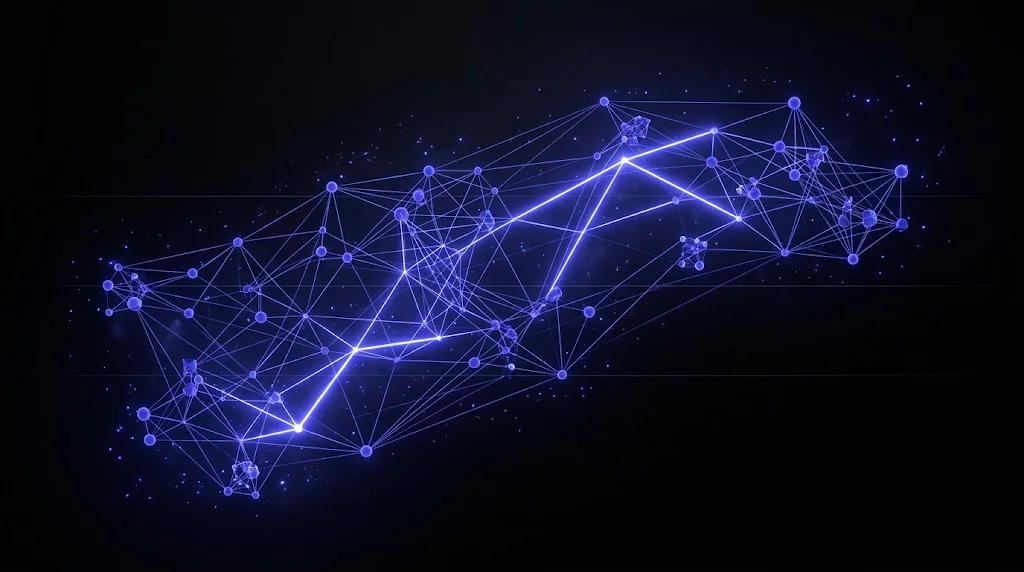
Advanced agent memory is anything beyond a simple vector fact-store, and in 2026 it splits into two camps: temporal knowledge graphs (Zep, Graphiti, Cognee) that model how facts change over time, and memory operating systems (Letta, MemOS) where the agent edits its own memory. If your agent only needs to remember a user’s preferences and “latest fact wins” is fine, a basic layer like Mem0 is enough. If it needs to reason about when things were true, or manage its own memory over days of autonomous work, you are in advanced territory. This post explains both camps and when each one actually beats a basic layer.
For the full landscape and a ranked shortlist, start with our pillar guide on AI agent memory frameworks in 2026.
Why does a basic vector memory fall short?
A naive vector memory stores facts as embeddings and retrieves the closest matches. That works until facts start to conflict. Say a user tells your agent “I work at Acme” in January and “I work at Globex” in June. A plain vector store now holds both facts, ranked only by similarity. It cannot tell you which one is current, and it certainly cannot tell you what was true back in March.
The problem is that a basic store has no concept of time or contradiction. Facts are timeless blobs. Real-world knowledge is neither. Advanced memory exists to fix exactly this.
What is a temporal knowledge graph?
A temporal knowledge graph models how facts change over time. Every fact is an edge in a graph, and every edge carries two separate timelines:
| Timeline | What it captures |
|---|---|
| Valid time | When the fact was actually true in the world |
| Transaction time | When the system learned about the fact |
Storing both is called bi-temporal modeling. Here is the key behavior: when a new fact contradicts an old one, the old edge is invalidated (its validity window is closed) rather than deleted. Nothing is thrown away. That single design choice unlocks point-in-time queries - you can ask “what did we believe was true as of March 15?” and get a correct answer, because the superseded edge is still there with its closed validity window.
For the “I work at Acme then Globex” example, a temporal graph keeps both edges, marks the Acme edge invalid after June, and answers “where does this user work now?” and “where did they work in March?” correctly. That is the whole point.
Graphiti: the open-source engine
Graphiti (getzep/graphiti, roughly 30k stars as of 2026, Apache-2.0) is a real-time, incremental bi-temporal knowledge-graph engine. You install it with pip install graphiti-core. It is Python and async-first.
The differentiator worth understanding is incremental updates versus Microsoft’s GraphRAG. GraphRAG typically needs a full recompute and a community-summarization pass to stay useful. Graphiti instead updates only the affected subgraph as new “episodes” (chunks of conversation or data) arrive. New knowledge is immediately queryable, with no full recompute and no required summarization step.
Retrieval is fast because Graphiti keeps no LLM in the retrieval loop. It combines vector similarity, BM25 keyword search, and graph traversal into a hybrid query that returns in sub-200ms. Backends are Neo4j (default), FalkorDB, or Amazon Neptune, and it ships an MCP server so agents can talk to it directly.
The weakness is on the write path. Ingestion is expensive: every episode triggers multiple LLM calls for extraction, entity resolution, and invalidation. Write cost scales with volume, and you have to operate a graph database. Reads are cheap and fast; writes are where you pay.
Zep: the managed product on top
Zep is the managed cloud product built on Graphiti (Zep Cloud). One thing to be accurate about: the old self-hosted “Zep Community Edition” open-source server was deprecated (announced April 2025). There is no supported self-hosted Zep server anymore. Your two real options are Zep Cloud or self-hosting Graphiti directly.
What Zep Cloud gives you over raw Graphiti is convenience. It returns a compact context block - a user summary plus the relevant facts, each tagged with valid and invalid times - that you drop straight into your prompt. No graph queries to write yourself.
Pricing has a free tier, then jumps to around $100+/month with no cheap paid tier in between. Treat that as a pricing cliff and always check current pricing before you commit, since it moves.
Cognee: the document-heavy engine
Cognee (topoteretes/cognee, roughly 30k stars as of 2026) is a memory and knowledge-graph engine built around an ECL pipeline (Extract, Cognify, Load) on top of the dlt data framework, which brings many ingestion connectors. It is hybrid graph plus vector: graph via Neo4j or Kuzu, vector via pgvector or LanceDB. The API is framed around remember, recall, forget, and improve, and it ships an MCP server.
Cognee shines when you need relationship-rich reasoning across documents plus conversations, not just chat. The trade-off is that it is the heaviest of the three to run - the most infrastructure to stand up and keep healthy.
For a direct head-to-head across these options plus Mem0 and Letta, see our Mem0 vs Zep vs Letta vs Cognee comparison.
What is a memory operating system?
The second camp treats memory less like a database and more like an operating system the agent manages itself.
Letta: the self-editing agent
Letta (letta-ai/letta, roughly 24k stars as of 2026, Apache-2.0) is the clearest example. On naming: MemGPT was the research pattern and paper (an LLM behaving like an OS with self-editing memory). The project rebranded to Letta in September 2024, and Letta is now the company, the open-source framework, and a cloud service. The PyPI package is named letta.
Letta’s architecture is an OS-style memory hierarchy, all persisted:
| Tier | Role |
|---|---|
| Core memory | Small, editable “memory blocks” pinned into the system prompt |
| Archival memory | External vector store searched on demand |
| Recall memory | The full message history |
The defining behavior is that the agent edits its own memory using tools: it can append or replace core memory and search archival memory. Two features stand out. Memory blocks are shareable across agents - edit one block and every agent attached to it sees the change instantly, which is the basis for multi-agent coordination. And sleep-time compute runs a background agent that reorganizes and consolidates memory during idle periods, trading idle compute for better recall and lower online latency. Letta also ships the ADE (Agent Development Environment), a visual IDE that shows the live context window and memory as the agent runs.
The weakness is lock-in. Letta owns the agent loop, so migrating away means rebuilding your agent, not just swapping a memory backend. Memory quality also depends heavily on the underlying model doing the editing well.
MemOS: the frontier
MemOS (MemTensor/MemOS, roughly 11k stars as of 2026) is the most ambitious take on a memory operating system. Its MemCube abstraction is a composable, migratable memory unit that unifies three memory types: plaintext (editable text), activation (KV-cache and hidden-state reuse), and parametric (baked into weights or adapters). It is research-grade with the youngest ecosystem and heavy self-hosting requirements. One naming note to avoid confusion: MemTensor/MemOS is a different project from BAI-LAB/MemoryOS, a separate hierarchical short/mid/long memory research implementation. Worth watching as the frontier, but not where most teams start.
When does advanced memory beat a basic layer?
Advanced memory is more powerful and more expensive to run. Match the tool to the actual requirement:
| You need to… | Reach for | Why |
|---|---|---|
| Reason about how state changed over time, or run point-in-time queries | Temporal knowledge graph (Graphiti / Zep) | Bi-temporal edges keep superseded facts queryable |
| Fuse chat with structured business data into one always-current graph | Temporal knowledge graph (Zep / Cognee) | Graph unifies conversational and structured knowledge |
| Reason richly across large document sets plus conversations | Cognee | ECL pipeline and many connectors handle document ingestion |
| Run long-running autonomous agents that manage their own evolving memory over days | Memory OS (Letta) | The agent edits and consolidates its own memory |
| Do simple personalization where latest fact wins | Basic layer (Mem0) | Cheapest and fastest to ship |
The honest default: most personalization use cases do not need any of this. If “remember the user’s name, tone, and last order” covers your needs, a basic layer like Mem0 is the right call, and you can read the full framework comparison for the head-to-head.
You reach for advanced memory when time or self-management genuinely matters: a healthcare agent that must know what a patient’s medication was last quarter, a sales agent that fuses CRM records with live conversation, or an autonomous research agent working a problem for days. Those are the cases where invalidated-not-deleted facts and self-editing memory earn their keep.
One practical note on infrastructure: every option here except Zep Cloud means running graph or vector databases yourself, and several trigger multiple LLM calls per write. If you plan to run this on serverless edge infrastructure, our guide to Cloudflare’s AI capabilities covers the vector and storage primitives that make these architectures cheaper to operate at scale.
The short version
Advanced agent memory is not one thing. Temporal knowledge graphs (Graphiti and the Zep Cloud product on top of it, plus Cognee for document-heavy work) solve the “what was true when” problem with bi-temporal, invalidate-don’t-delete edges. Memory operating systems (Letta, with MemOS as the frontier) solve the “let the agent manage its own memory” problem. Both cost more to run than a basic layer, so only adopt them when temporal reasoning or self-management is a real requirement, not a nice-to-have.
Not sure which camp fits your agent? Our team designs the memory architecture as part of AI agent development, and for graphs that fuse chat with your business systems we handle the full build through enterprise AI integration. Tell us what your agent needs to remember, and we will tell you the simplest thing that works.
Frequently Asked Questions
What is a temporal knowledge graph in AI agent memory?
A temporal knowledge graph stores facts as edges that carry two timelines: valid time (when the fact was true in the world) and transaction time (when the system learned it). This bi-temporal design means a contradicted fact has its validity window closed rather than being deleted, which enables point-in-time queries like what was true as of a given date.
What is the difference between Zep and Graphiti?
Graphiti is the open-source (Apache-2.0) bi-temporal knowledge-graph engine you self-host on Neo4j, FalkorDB, or Amazon Neptune. Zep is the managed cloud product built on top of Graphiti that returns a ready-to-use context block. The old self-hosted Zep Community Edition server was deprecated in April 2025, so you either use Zep Cloud or run Graphiti directly.
Is Letta the same as MemGPT?
Yes, in lineage. MemGPT was the research pattern (an LLM acting like an operating system that edits its own memory). The project rebranded to Letta in September 2024, which is now the company, the open-source framework, and the cloud service. The PyPI package is simply named letta.
When should I use a memory OS instead of a knowledge graph?
Choose a memory OS like Letta for long-running autonomous agents that must manage their own evolving memory over days, edit what they keep, and share memory blocks across agents. Choose a temporal knowledge graph when you need to reason about how state changed over time or fuse chat with structured business data into one always-current graph.
Do I always need advanced memory for my AI agent?
No. For simple personalization where latest fact wins is good enough, a basic vector-backed layer like Mem0 is faster to ship and cheaper to run. Advanced memory earns its extra infrastructure only when you need point-in-time queries, temporal reasoning, or an agent that edits its own memory autonomously.
Complementary NomadX Services
Related Articles
Get Started for Free
Schedule a free consultation with our AI agents team. 30-minute call, actionable results in days.
Every engagement is scoped by our principal architect, Adrian Vale: 20+ years in production engineering, 40+ professional certifications. Meet Adrian
Talk to an Expert